
Fridge spare parts, matched to your model.
Order on WhatsApp with your model number. We confirm the right part, price and delivery before anything is paid.
What we supply.
The model number is on a sticker inside the fridge, usually on a side wall. A photo of it is all we need to start.
About each part.
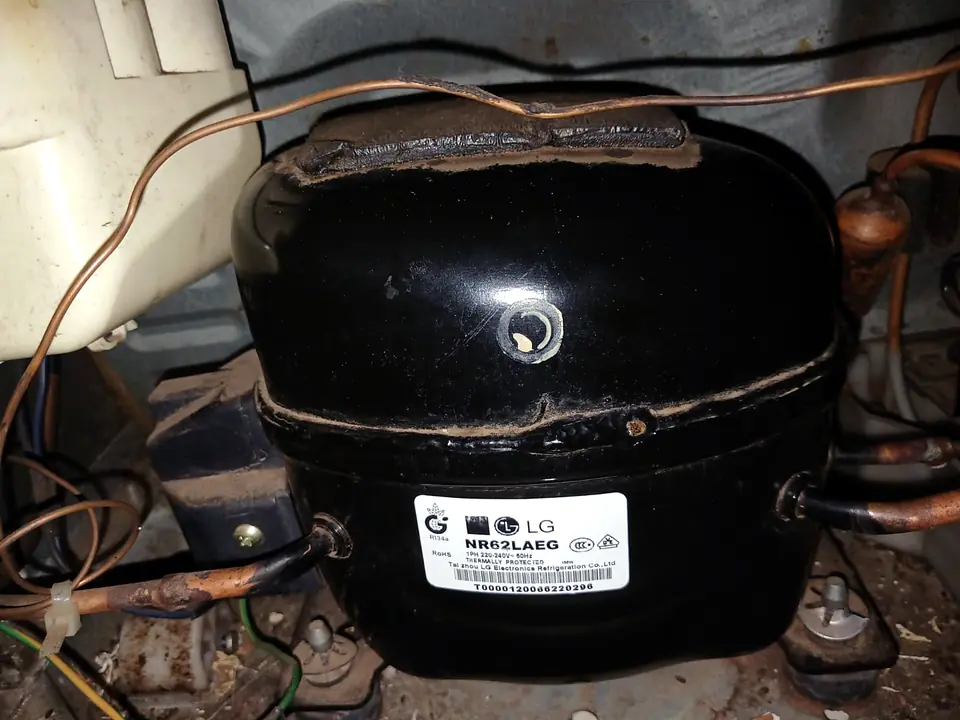
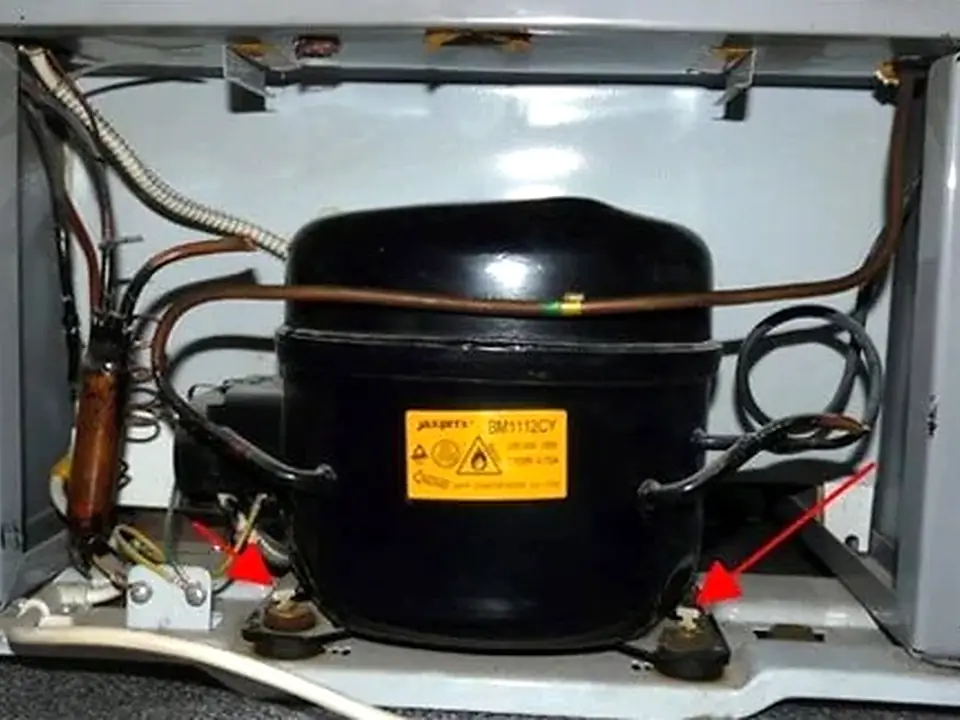
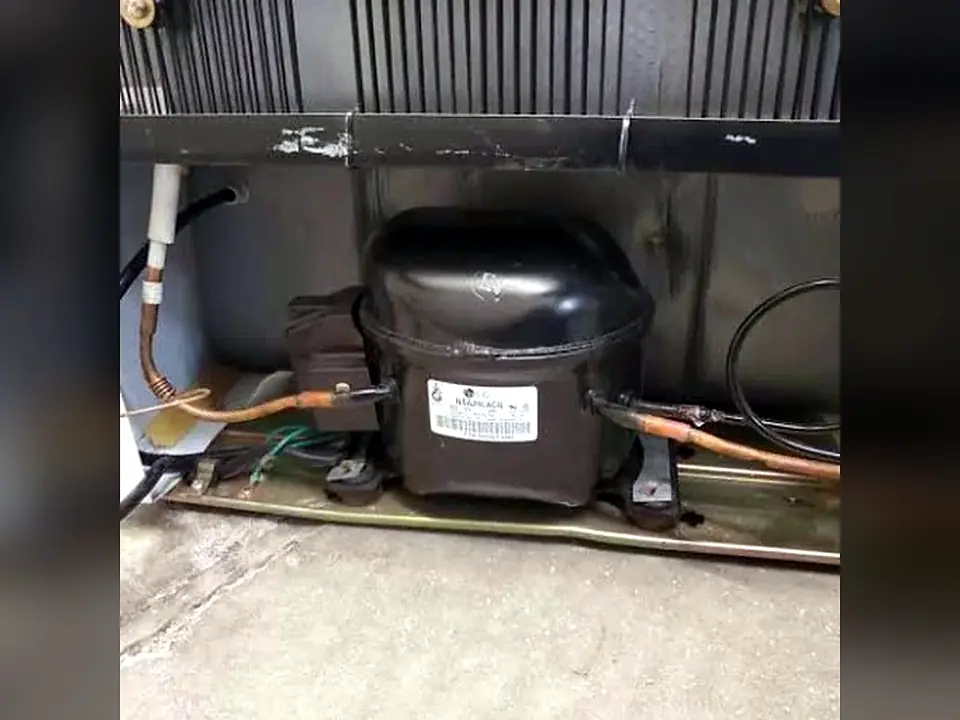
Compressors
For home and commercial fridges, matched to the gas type and capacity.
Thermostats and sensors
Mechanical thermostats and electronic temperature sensors.
Fans and fan motors
Evaporator and condenser fans for no-frost fridges.
Door seals
Made to fit your model, for fridges and freezers.
Inverter and control boards
Main boards and inverter boards, tested before fitting.
Defrost parts
Heaters, sensors, timers and fuses.
Start relays and overloads
For compressors that click but will not start.
Refrigerant gas
R600a and R134a, charged by our technicians after a leak repair.
Questions people ask
How do I order a fridge spare part?
Send us the model number from the rating plate inside the fridge, and a photo of the old part if you have it, on WhatsApp. We confirm the right part, the price and delivery before you pay.
Can your technician fit the part?
Yes. Compressors, boards and gas should be fitted by a technician. We can supply and fit in one visit.
Good to know about your fridge.
Inverter fridges explained
A traditional compressor switches fully on and fully off. An inverter compressor changes its speed to suit the cooling needed. It runs slowly most of the time, which is quieter and uses less power, and it speeds up when the fridge needs to cool down.
To do that it needs a control board, called the inverter board, that converts the power and drives the compressor. The board is the weak point, because it dislikes surges and heat. When a board fails, the compressor does not start, even though the compressor itself may be fine.
That is why we test the board, the wiring and the compressor separately. A board can sometimes be repaired and sometimes needs replacing with a matching part. A voltage guard and a clean condenser are the best protection for an inverter fridge.
What happens on a visit
You call or WhatsApp us with what the fridge is doing and a photo of the model sticker. We tell you when a technician can come and how the visit fee works. The technician arrives, listens to the fridge, measures the temperature in both sections and checks the obvious causes in order.
When the fault is found, you are told what it is, shown the worn part where possible and given the full price for parts and labour before anything is changed. Nothing is done without your agreement. If a part has to be ordered, we tell you how long it will take.
After the repair, the fridge is left running and checked to confirm it is pulling down to temperature. Before we leave, we explain what failed and how to avoid it next time. If the fridge is not worth repairing, we say so, and we can collect an old fridge for responsible recycling.
How a fridge actually keeps things cold
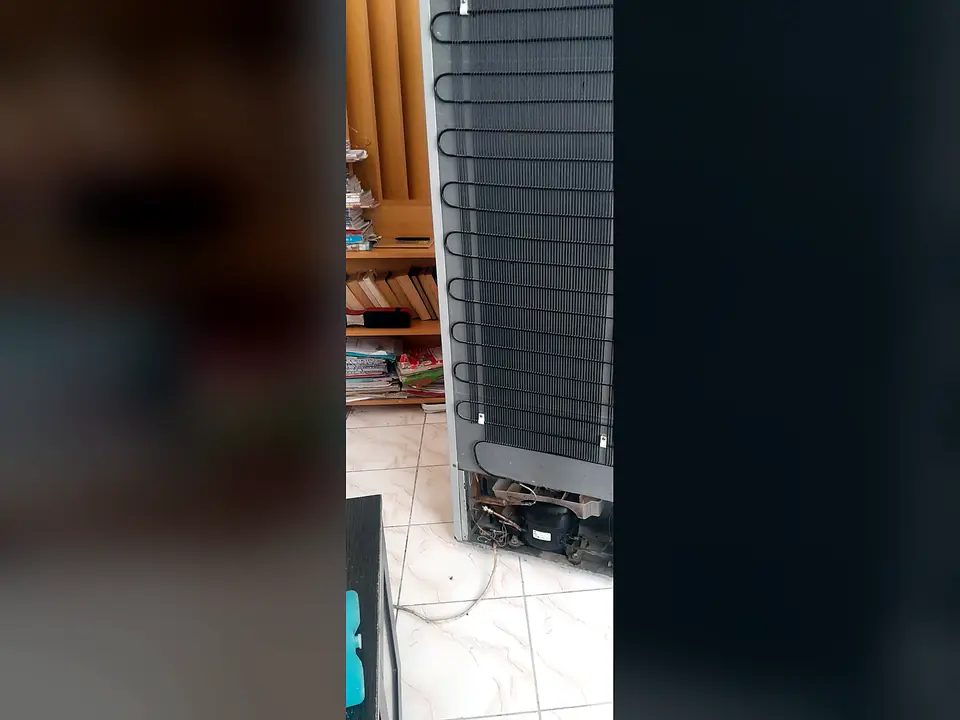
A fridge does not make cold. It moves heat. Inside the sealed pipework there is a refrigerant gas. The compressor squeezes the gas, which makes it hot, and the hot gas flows through the coil at the back or underneath, called the condenser, where it gives its heat to the room. The gas turns to a liquid, passes through a very thin tube that drops its pressure, and arrives in the cold coil inside the fridge, the evaporator, where it turns back to a gas and soaks up heat from the food. Then it returns to the compressor and the cycle repeats.
That is why the back of a fridge feels warm and why a fridge squeezed into a cabinet struggles. If the heat cannot leave, the cycle slows and the compressor runs for longer. It is also why gas does not get used up: it travels round in a closed loop. When a fridge is low on gas there is a leak, and the leak has to be found and sealed first.
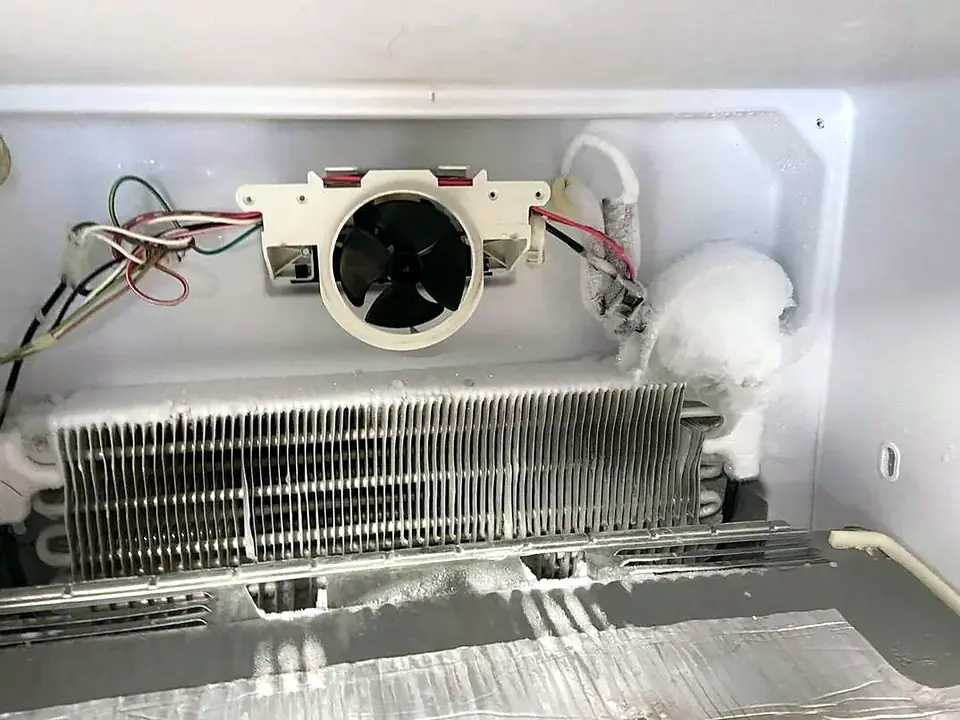
In a no-frost fridge a fan blows air over the evaporator and into the compartments, and a small heater melts the frost off the coil a few times a day. Most cooling faults come from these supporting parts, the fan, the heater, the sensor and the board, long before the compressor itself fails.
Reading the rating plate inside your fridge
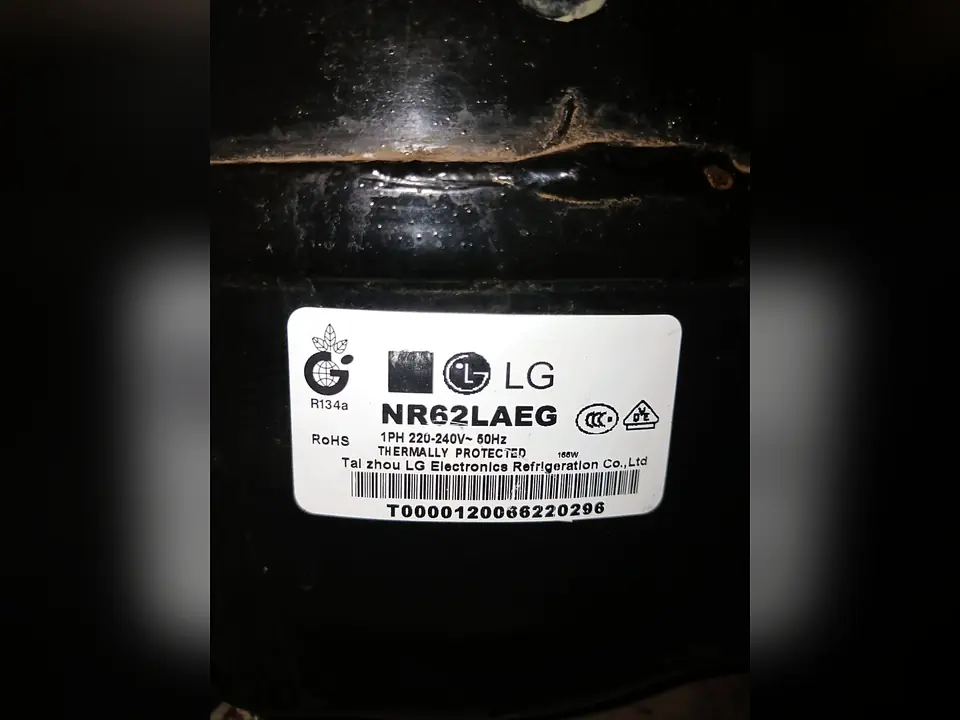
Almost every fridge has a sticker or metal plate inside, usually on a side wall or at the back of the fridge compartment. It tells a technician almost everything: the brand, the model number, the voltage and frequency, the type of gas the fridge uses and how much of it, and often the manufacturing date.
Take a clear photo of that plate before you call. With the model number we can check which thermostat, seal, fan or board fits, which saves time on the visit. The gas type matters too. Modern fridges often use R600a, a flammable gas used in small amounts, while older ones commonly use R134a. The two are not interchangeable, and a fridge must always be charged with the gas printed on its own plate.
If you cannot find the plate, look for a sticker behind the vegetable drawers, on the inside of the door frame or on the back of the cabinet. Send us whatever you can find and the brand, and we will help you identify the model.
Protecting a fridge from power cuts and surges
Power cuts and surges are hard on fridges. When the supply returns it can arrive with a spike that damages the control board or the parts that start the compressor. Inverter fridges are the most sensitive, because a board sits between the plug and the compressor.
A good voltage guard, also called a fridge guard, delays the power coming back for a few minutes and cuts it if the voltage is too high or too low. It costs far less than a board repair. Choose one rated for the fridge, plug the fridge into it directly and avoid sharing the socket with a heater or an iron.
After any outage, wait a few minutes before switching the fridge on if you do not have a guard. Keep the door closed during the cut. A full fridge holds its cold for several hours if it is not opened, and a full freezer holds it for longer. Do not keep switching the fridge off and on at the wall; it puts strain on the compressor.
Food safety when a fridge stops cooling
Bacteria multiply quickly above about five degrees. If the fridge side is warm, move milk, meat, fish and cooked food to the freezer or a cool box with ice, and keep the door closed as much as you can. If the freezer is still frozen, do not open it more than you need to.
As a rule of thumb, fresh meat, fish, dairy and cooked leftovers should not stay in a warm fridge for more than a few hours. Food that has thawed and warmed should not be refrozen if it has been warm for long. When in doubt, throw it out: a repair is cheaper than being ill.
Medicines that need refrigeration should be moved to a cool box and kept as cold as the label asks. If you are not sure whether something is still safe, check the instructions on the packaging or ask a pharmacist.
Why gas is rarely the first thing we check
Many people ask for a gas refill as soon as a fridge stops cooling. In practice, a fridge uses no gas. It circulates the same sealed charge for its whole life. If the charge is low, the fridge has a leak, and a refill without finding the leak means paying again in a few weeks.
Most cooling faults are something else: a blocked air channel, a stopped fan, a dirty condenser, a failed defrost heater, a worn door seal, a start relay, a thermostat or a board. These are found with a few tests, and they are usually cheaper to put right than a gas job.
When the tests point to a leak, we find it first, usually at a joint, a pipe that has rubbed or a corroded coil, repair it, pull a vacuum to remove air and moisture and then charge the exact gas the fridge was built for, by weight. That is the only way a gas job lasts.
Fridges and freezers we work on.
Not sure which part you need?
Tell us what the fridge is doing. Often a technician visit is quicker than guessing the part.