
Freezer not freezing?
Ice cream turning soft and meat thawing at the edges usually point to a fault in the cooling system, the door seal or the defrost parts.
How it usually shows.
- Ice cream is soft or sticky
- Frozen food feels hard on the outside but soft inside
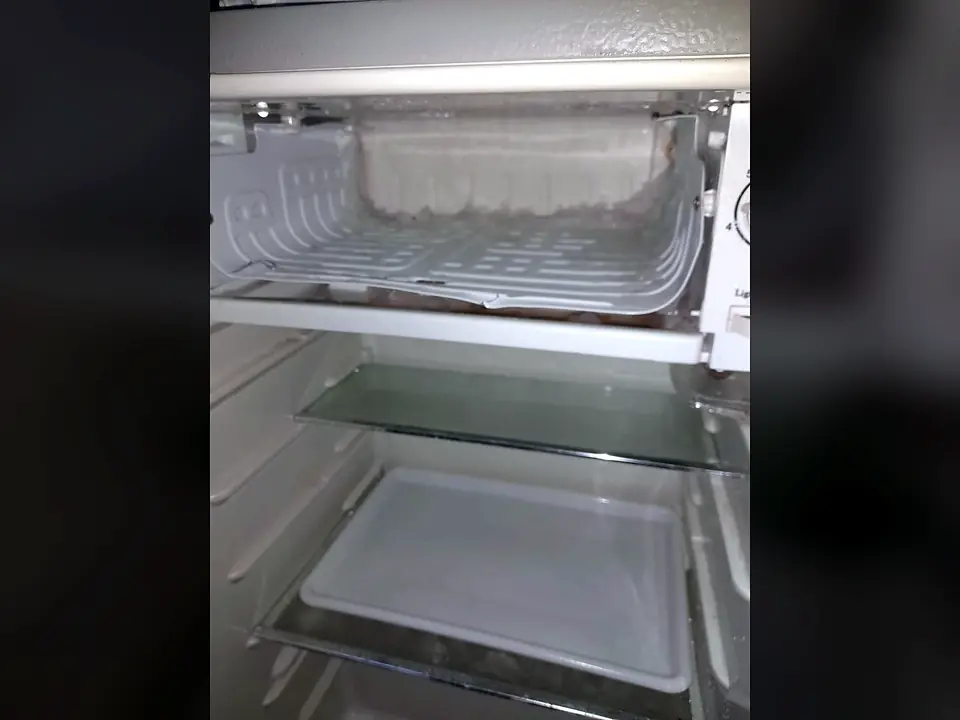
- Frost has built up on the back wall
- The freezer drawer is hard to close
Why it happens.
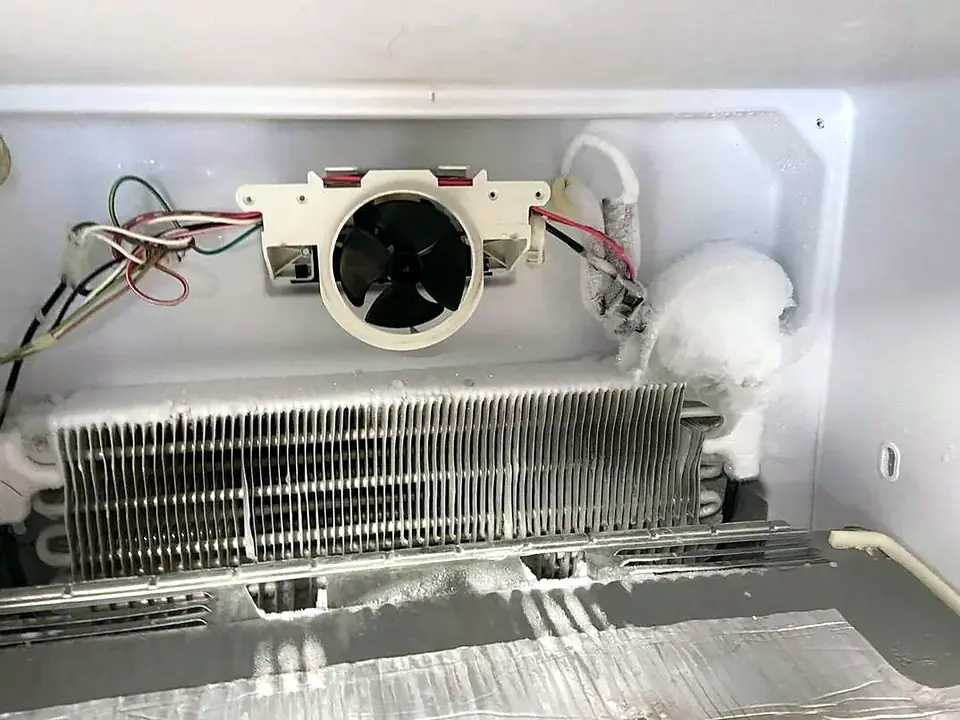
Frost on the evaporator
If the automatic defrost fails, ice slowly covers the cooling coil and cold air cannot get through.
Door seal letting air in
A torn or stiff seal lets warm, damp kitchen air in. That brings frost and loss of cold.
Overpacked freezer
Bags pressed against the vents block the air the freezer needs to circulate.
Compressor or start relay
If the compressor clicks on and off without running, the start relay or the compressor itself may be failing.
Gas leak
A slow leak lets the freezer warm up gradually over weeks.
What the technician does.
We check the freezer temperature and look at the frost pattern on the back wall.
We test the defrost heater, sensor and timer or board.
We check the door seal and the compressor start parts.
We fix the cause and confirm the freezer reaches freezing temperature again.
Safe things to check.
- Leave space around the vents inside the freezer.
- Check the drawers and door are fully closed and nothing is sticking out.
- If there is thick ice, empty the freezer and let it defrost with the door open before we come.
Freezer Not Freezing in Nairobi is one of the jobs we do most. Call or WhatsApp 0703 543 656 and tell us what the fridge is doing.
Questions people ask
Why is there so much ice in my freezer?
Thick ice usually means warm air is getting in through the seal or the automatic defrost has stopped working. Scraping it off only helps for a few days; the cause needs fixing.
Can I defrost the freezer myself?
Yes. Switch it off, empty it and leave the door open with towels underneath. Never use a knife or sharp tool on the ice: it can pierce the gas pipes.
Other fridge problems.
Good to know about your fridge.
Saving power with the fridge you already have
A fridge runs all day and every day, so small improvements add up. Set the fridge between about three and five degrees and the freezer at minus eighteen. Colder settings use more power without protecting the food any better.
Keep the condenser clean, leave air space around the fridge and keep it away from the cooker and direct sun. Check the door seal and do not leave the door open while you decide what to eat.
A full fridge holds its cold better than an empty one, so a few bottles of water on the shelves help in a fridge that is mostly empty. Do not overpack it, though, because the air must still move. If a fridge is very old and the compressor is struggling, a replacement may repay itself in power, and we will tell you honestly if that applies.
Inverter fridges explained
A traditional compressor switches fully on and fully off. An inverter compressor changes its speed to suit the cooling needed. It runs slowly most of the time, which is quieter and uses less power, and it speeds up when the fridge needs to cool down.
To do that it needs a control board, called the inverter board, that converts the power and drives the compressor. The board is the weak point, because it dislikes surges and heat. When a board fails, the compressor does not start, even though the compressor itself may be fine.
That is why we test the board, the wiring and the compressor separately. A board can sometimes be repaired and sometimes needs replacing with a matching part. A voltage guard and a clean condenser are the best protection for an inverter fridge.
What happens on a visit
You call or WhatsApp us with what the fridge is doing and a photo of the model sticker. We tell you when a technician can come and how the visit fee works. The technician arrives, listens to the fridge, measures the temperature in both sections and checks the obvious causes in order.
When the fault is found, you are told what it is, shown the worn part where possible and given the full price for parts and labour before anything is changed. Nothing is done without your agreement. If a part has to be ordered, we tell you how long it will take.
After the repair, the fridge is left running and checked to confirm it is pulling down to temperature. Before we leave, we explain what failed and how to avoid it next time. If the fridge is not worth repairing, we say so, and we can collect an old fridge for responsible recycling.
How a fridge actually keeps things cold
A fridge does not make cold. It moves heat. Inside the sealed pipework there is a refrigerant gas. The compressor squeezes the gas, which makes it hot, and the hot gas flows through the coil at the back or underneath, called the condenser, where it gives its heat to the room. The gas turns to a liquid, passes through a very thin tube that drops its pressure, and arrives in the cold coil inside the fridge, the evaporator, where it turns back to a gas and soaks up heat from the food. Then it returns to the compressor and the cycle repeats.
That is why the back of a fridge feels warm and why a fridge squeezed into a cabinet struggles. If the heat cannot leave, the cycle slows and the compressor runs for longer. It is also why gas does not get used up: it travels round in a closed loop. When a fridge is low on gas there is a leak, and the leak has to be found and sealed first.
In a no-frost fridge a fan blows air over the evaporator and into the compartments, and a small heater melts the frost off the coil a few times a day. Most cooling faults come from these supporting parts, the fan, the heater, the sensor and the board, long before the compressor itself fails.
Reading the rating plate inside your fridge
Almost every fridge has a sticker or metal plate inside, usually on a side wall or at the back of the fridge compartment. It tells a technician almost everything: the brand, the model number, the voltage and frequency, the type of gas the fridge uses and how much of it, and often the manufacturing date.
Take a clear photo of that plate before you call. With the model number we can check which thermostat, seal, fan or board fits, which saves time on the visit. The gas type matters too. Modern fridges often use R600a, a flammable gas used in small amounts, while older ones commonly use R134a. The two are not interchangeable, and a fridge must always be charged with the gas printed on its own plate.
If you cannot find the plate, look for a sticker behind the vegetable drawers, on the inside of the door frame or on the back of the cabinet. Send us whatever you can find and the brand, and we will help you identify the model.
Protecting a fridge from power cuts and surges
Power cuts and surges are hard on fridges. When the supply returns it can arrive with a spike that damages the control board or the parts that start the compressor. Inverter fridges are the most sensitive, because a board sits between the plug and the compressor.
A good voltage guard, also called a fridge guard, delays the power coming back for a few minutes and cuts it if the voltage is too high or too low. It costs far less than a board repair. Choose one rated for the fridge, plug the fridge into it directly and avoid sharing the socket with a heater or an iron.
After any outage, wait a few minutes before switching the fridge on if you do not have a guard. Keep the door closed during the cut. A full fridge holds its cold for several hours if it is not opened, and a full freezer holds it for longer. Do not keep switching the fridge off and on at the wall; it puts strain on the compressor.
Food safety when a fridge stops cooling
Bacteria multiply quickly above about five degrees. If the fridge side is warm, move milk, meat, fish and cooked food to the freezer or a cool box with ice, and keep the door closed as much as you can. If the freezer is still frozen, do not open it more than you need to.
As a rule of thumb, fresh meat, fish, dairy and cooked leftovers should not stay in a warm fridge for more than a few hours. Food that has thawed and warmed should not be refrozen if it has been warm for long. When in doubt, throw it out: a repair is cheaper than being ill.
Medicines that need refrigeration should be moved to a cool box and kept as cold as the label asks. If you are not sure whether something is still safe, check the instructions on the packaging or ask a pharmacist.
Fridges and freezers we work on.
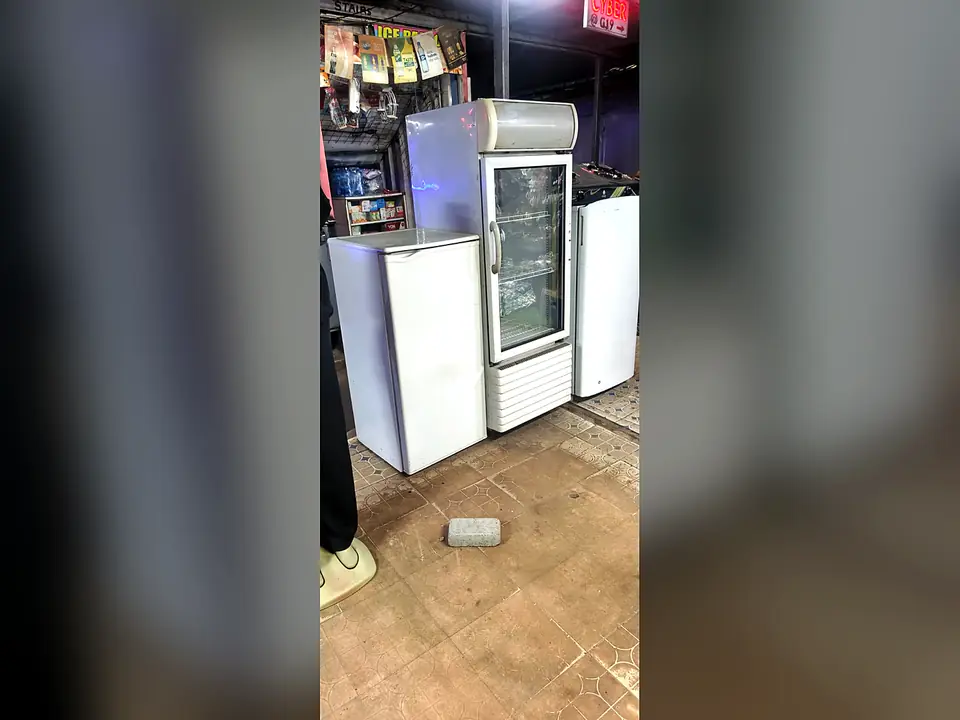
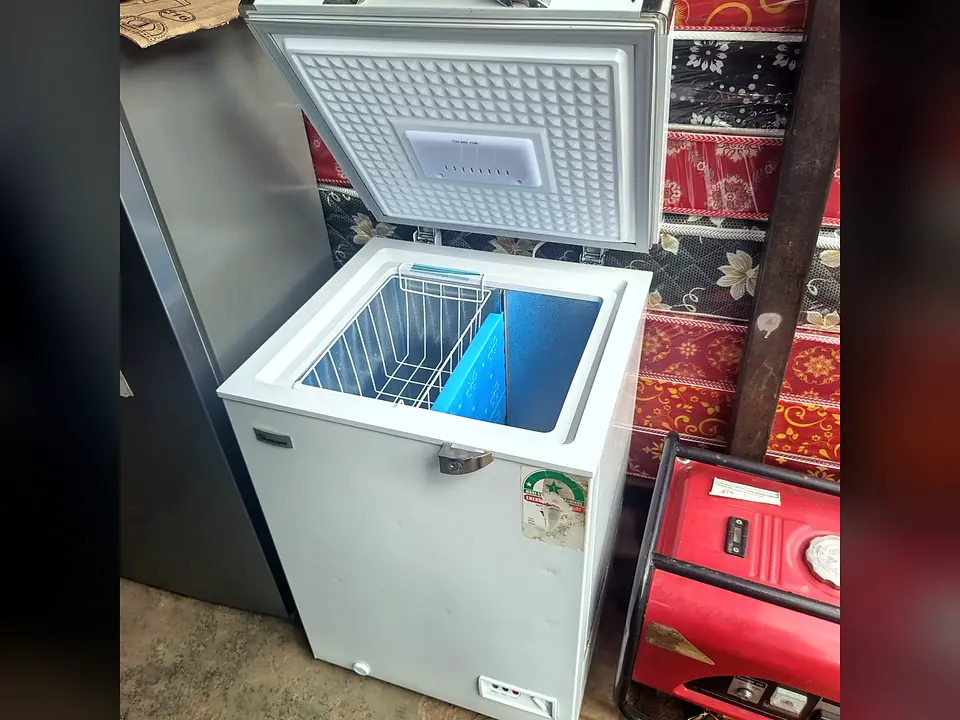
A cold fridge, today.
Call or WhatsApp with what the fridge is doing and a photo of the model sticker. We tell you when a technician can come.